
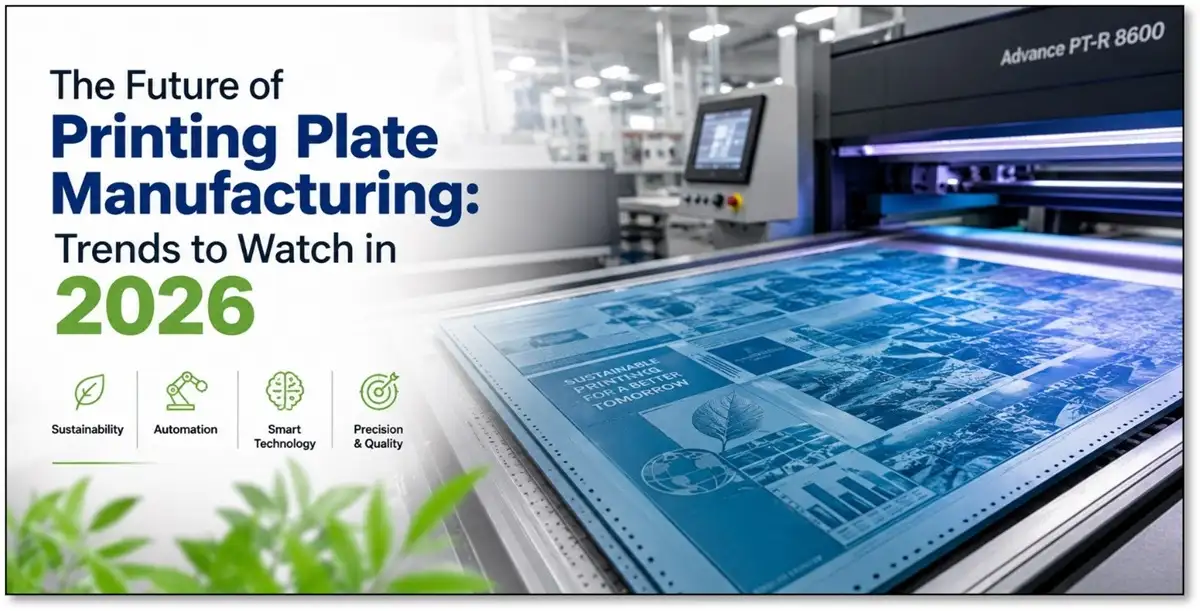
A New Era for Plate Production
Printing has always been a business shaped by change, but lately the changes have been arriving faster and carrying more weight. Packaging buyers expect tighter quality standards, shorter lead times, and greater consistency from run to run. At the same time, printers are under constant pressure to control costs and reduce waste. Those demands eventually make their way back to the plate room. What was once viewed as a supporting process is now recognized as a critical part of overall press performance. In 2026, the conversation around plate production is less about keeping up and more about staying ahead.
Digital Workflows Are Becoming the Standard
A few years ago, advanced digital workflows felt like a competitive advantage. Today, they are quickly becoming the baseline. Modern imaging systems allow for far greater precision than older methods, helping eliminate variables that can affect print quality before production even begins. Fine text, complex graphics, and demanding packaging designs all benefit from that level of control. This is one reason many printing plate manufacturers continue investing in digital technologies that improve repeatability and reduce the chances of costly corrections later in the process.
Automation Is Quietly Changing Everything
Automation rarely gets the same attention as a new press or a major packaging innovation, yet its impact is hard to ignore. Tasks that once required multiple manual checks can now move through production with far greater efficiency. The real value is not simply speed. It is consistency. Automated systems help reduce human error, standardize workflows, and create more predictable results. For shops handling a growing volume of work, those improvements can make a noticeable difference in daily operations.
Sustainability Is Becoming a Practical Business Decision
Sustainability conversations have matured over the last few years. Companies are no longer pursuing environmental improvements simply because they look good in a report. They are looking at them as practical ways to improve efficiency and reduce unnecessary costs. In plate production, that often means focusing on areas such as:
- Reducing material waste through tighter process control
- Improving production efficiency to conserve resources
- Extending plate life to reduce replacement frequency
- Adopting cleaner manufacturing practices where possible
These changes may not always be visible to the end customer, but they often create measurable benefits throughout the production chain.
Higher Print Expectations Continue to Raise the Bar
Packaging has become one of the most important marketing tools a brand owns. Walk through any retail aisle, and the competition for attention is obvious. Strong graphics, consistent color reproduction, and crisp detail are no longer optional. They are expected. That reality is pushing printing plate manufacturers to develop solutions capable of delivering finer detail and more reliable performance across increasingly demanding applications. The margin for error keeps shrinking, especially for brands that rely heavily on packaging to influence purchasing decisions.
Precision Matters More in Regulated Industries
Some sectors feel these pressures more than others. Pharmaceutical packaging is a good example. A slight variation in print quality may be little more than an annoyance in one application, but in regulated packaging, it can become a much bigger concern. Barcodes must scan correctly. Product information must remain legible. Consistency matters from the first package to the last. A dependable printing plates manufacturer understands that quality control is not just part of the process. It is the process.
Collaboration Is Replacing the Old Supplier Relationship
One interesting shift in recent years has been the growing partnership between printers and their plate providers. The old transactional model is becoming less common. More companies want technical input early in the project, before artwork reaches production. That collaboration often uncovers potential problems while they are still easy to fix. It saves time, reduces waste, and usually leads to better print results. In many cases, the strongest outcomes come from conversations that happen long before the press starts running.
Looking Ahead
The future of plate manufacturing will not be defined by a single breakthrough. It will be shaped by hundreds of small improvements that work together to make production more accurate, efficient, and dependable. Digital workflows, automation, sustainability initiatives, and stronger quality standards are all moving the industry in that direction. Companies like PlateCrafters recognize that lasting success comes from balancing innovation with consistency, because in the end, customers need both.
Conclusion
Nobody can predict every change the printing industry will see over the next few years, but a few things seem fairly certain. Customers will keep expecting better quality, deadlines will stay tight, and production teams will continue looking for ways to do more with less waste and fewer headaches. The companies that adapt tend to be the ones that pay attention to the details before those details become problems. If you’re evaluating your current plate production process or simply looking for a more dependable resource, we’d be glad to have a conversation and see how we can help.
FAQs
1. Why are digital workflows becoming more important in printing plate manufacturing?
Digital workflows improve accuracy and consistency, helping printers reduce errors and achieve more reliable print results.
2. How does automation benefit the plate production process?
Automation reduces manual intervention and helps maintain consistent quality while improving production efficiency.
3. Why is sustainability gaining attention in the printing industry?
Companies are looking for practical ways to reduce waste, conserve resources, and improve operational efficiency.
4. What makes quality control so important for pharmaceutical packaging?
Strict regulations require clear, consistent printing to ensure barcodes, product details, and critical information remain accurate.
5. How can collaboration between printers and plate providers improve results?
Early technical input can identify potential issues before production begins, helping save time and reduce costly rework.