
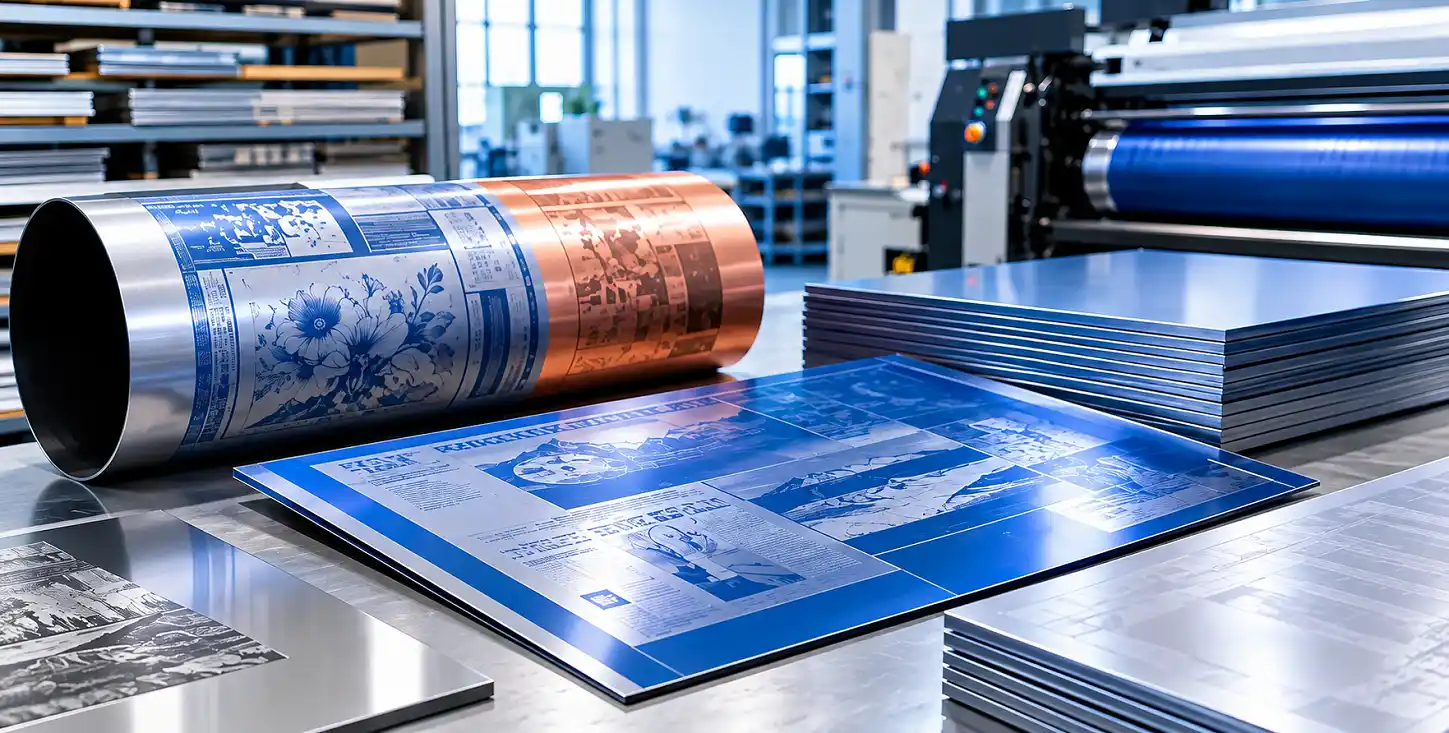
Two jobs can look nearly identical on a spec sheet and still behave completely differently on press. The equipment running them, the stock feeding through, the finish the client signed off on, how fine the artwork gets in the shadows; all of it decides what the plate has to be capable of, and none of it is guesswork if you’ve spent enough time standing next to a press watching things go right or wrong. A plate that ran perfectly on one job can underperform badly on the next even when someone swears the two projects were basically the same. That’s really the whole argument for taking plate manufacturer selection seriously. It’s not about finding a shop that can cut a plate to a drawing. It’s about finding people who know materials well enough to catch a mismatch before it becomes a production problem.
Why Different Press Applications Need Different Plates
Plates get treated like commodity items more often than they should be. They’re not. Every press process leans on a plate differently, with its own pressure profile, speed, and handling quirks, and those change again depending on what substrate is running, what ink and coating are involved, and how long the run is going to be. We don’t pull orders off a queue and process them like they’re all the same job wearing different labels. The first real question is always how the plate is going to be used once it’s actually on press, and answering that honestly upfront saves a lot of headaches that otherwise show up mid-run, which is the worst possible time to discover a mismatch.
Matching Plate Materials to the Printing Process
Material choice is not a footnote; it’s often the decision that determines whether the job goes smoothly or turns into a troubleshooting exercise. Thickness, hardness, how deep the relief is cut, the backing, the surface finish itself; each of these has a direct effect on how the plate holds up once it’s under pressure and moving product. That matters even more once specialty coatings, fine detail artwork, or tight production tolerances enter the picture, because there’s less room to absorb a bad guess. We look at press process, substrate, artwork, and finish as one connected problem rather than four separate checkboxes, and we build the plate around what the job actually needs instead of reaching for whatever’s closest on the shelf.
Supporting Coating and Finishing Applications
Finishing tends to be where projects get complicated, and it’s often underestimated until something doesn’t come out right. UV coatings, varnishes, and other specialty finishes need precise, controlled application to hit the look and coverage a client actually wants, not just something in the general neighborhood of it. UV coating plates exist for that exact demand, where coverage accuracy has to hold steady run after run, not just on the first pull. Some jobs need coating on one section and absolutely none anywhere else, and in that situation the plate has to reproduce that boundary exactly, every time, with zero drift. Working through the finishing requirements before manufacturing starts is what keeps the plate functioning as part of the whole production line rather than as an isolated piece that someone else has to compensate for later.
What to Consider Before Selecting a Printing Plate
Planning ahead of time turns plate selection from a guessing game into a straightforward decision, and it doesn’t take long to do properly. Instead of judging a plate on its own, it helps to think through everything it’s going to run into once it’s actually working. Here’s what’s worth nailing down before anything gets manufactured:
- Press type: the plate has to match the equipment it’s going onto, not a generic version of that equipment.
- Substrate: paper, packaging board, and plastic each pull different behavior out of a plate.
- Artwork detail: fine text, solid fields of coverage, or intricate linework shape the spec in ways that aren’t always obvious until you’re staring at proofs.
- Finishing requirements: if coatings or varnishes are involved, they often demand specific plate characteristics to apply cleanly.
- Plate specifications: thickness, relief depth, material, and backing all need to line up with the actual job rather than a standard default.
- Production requirements: expected run length and how repeatable the results need to be round out the picture.
Working through these points ahead of time gives a much sharper sense of what the plate is actually being asked to do. It also gives us something real to talk through with a customer before manufacturing starts, and that conversation tends to be a lot more useful than one built around assumptions.
How Plate Specifications Affect Production
Specs that look fine on paper can turn into real problems the moment a plate hits the press. Thickness, relief, the material’s own characteristics, how the whole plate is constructed, and all of it shapes performance once production actually starts. We stopped evaluating any of these in isolation a long time ago, because that’s not how they behave once they’re under load. They interact, constantly, with the press, the substrate, and the process running around them, so we look at the combination rather than treating any single number as the whole story. The goal is a plate that fits the practical demands of the job and holds that performance steady from the first sheet to the last, not just on a good day.
Why Experience Matters When Choosing a Plate
A plate never operates by itself. Its performance is tied directly to how well it works with the press, the substrate, the artwork, the ink, the coating, and everything else happening in that production run at the same time. Working with a printing plates manufacturer who has genuine experience makes this whole process easier, mostly because the conversation stays focused on the actual job instead of getting stuck picking through a catalog of standard products that were never built with your application in mind. At PlateCrafters, that’s the approach we take: application-focused plate manufacturing and material selection, aimed at helping customers land on something that actually fits their printing and finishing requirements rather than something merely close enough.
Conclusion
Plate selection works better when the application drives the decision, not the other way around. Whether the job involves dry offset printing, letterpress work, coating, varnishing, packaging, or something more specialized, understanding what the press needs and what result you’re chasing is what actually points you toward the right plate. If you’re planning a new project, or trying to pin down the right specifications for something already in motion, get in touch and we’ll go through what your production process actually requires.
FAQs
1. What’s the most important factor in choosing a printing plates manufacturer?
Look for one who understands materials deeply enough to match a plate to your specific press application, not just cut it to a drawing.
2. Can the same plate specification work across different presses?
No, pressure, speed, and handling vary by press process, so a plate suited to one application often underperforms on another.
3. How do plate specifications like thickness and relief affect a print run?
They shape how the plate holds up under pressure, and they need to be considered together with the press, substrate, and process rather than in isolation.
4. Are UV coating plates different from standard printing plates?
Yes, they’re built to hold precise, repeatable coverage for UV coatings and varnishes, which standard plates aren’t designed to maintain.
5. What information should I have ready before requesting a plate?
Press type, substrate, artwork detail, finishing requirements, plate specifications, and expected production volume.