
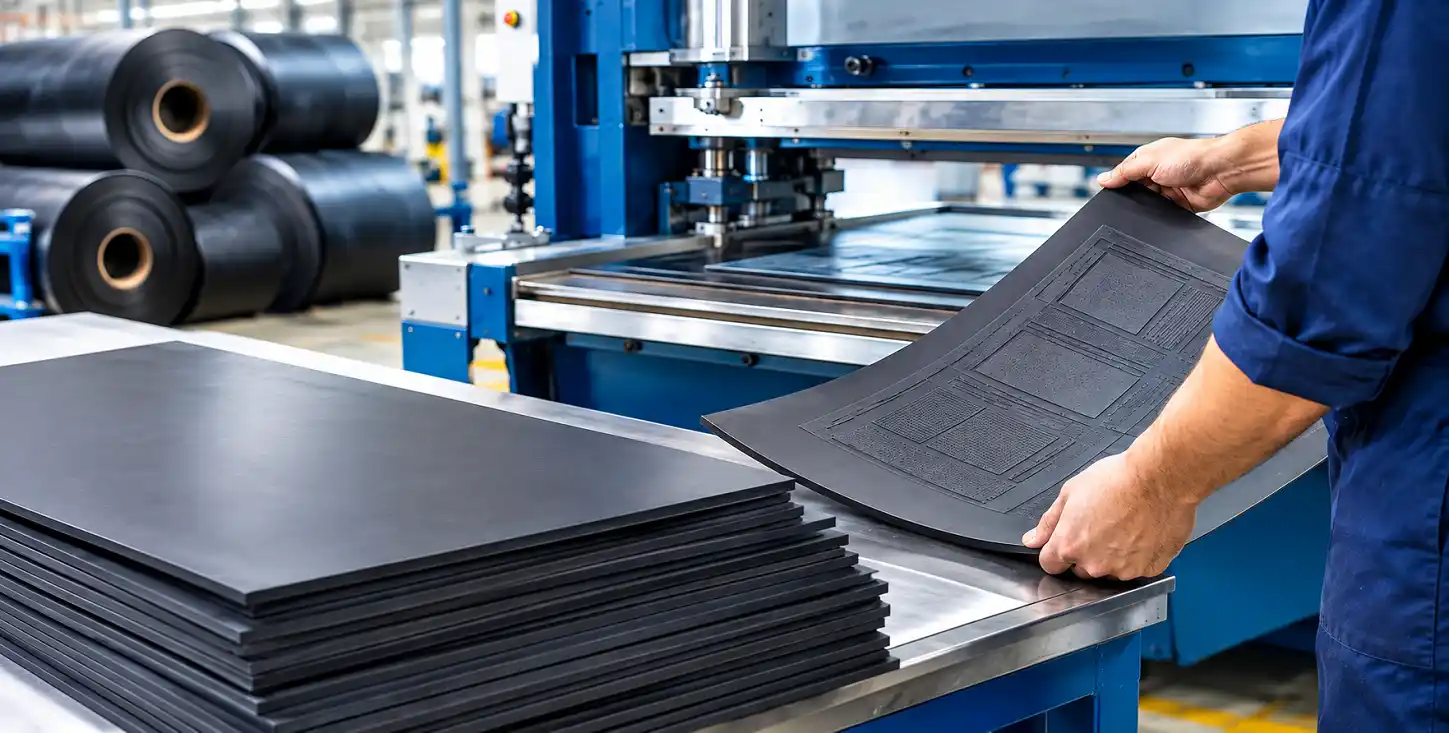
Printing on a smooth sheet is usually straightforward. Start working with corrugated stock, flexible packaging, coated material, or a surface with noticeable texture, and the job gets more interesting. Ink does not behave exactly the same way, pressure is distributed differently, and the plate may not contact every part of the substrate with equal force. Those small differences are often what separate a clean impression from one that looks patchy or lacks definition. We pay attention to the substrate first because a plate that performs beautifully on one material can behave quite differently on another.
Why Challenging Materials Affect Ink Transfer
Ink transfer is really about contact. The plate has to meet the substrate properly, the ink has to release as intended, and the press has to provide the right amount of pressure. A textured surface can leave small areas with less contact, while a flexible material may shift or give slightly during the impression. Coatings can change the way ink sits on the surface, too. None of this means the material is unsuitable for printing. It means the plate needs to be selected with those characteristics in mind. Looking at the actual substrate before production gives us a much clearer idea of what the finished impression is likely to require.
How Flexibility Helps With Surface Contact
Rubber is useful in demanding applications partly because it has some ability to conform to the surface beneath it. If the substrate has minor variations, rubber printing dies can maintain contact where a rigid surface might struggle. There is a catch, though. Softer is not automatically better. A plate that is too flexible can affect small details or alter the way pressure is distributed, while one that is too firm may not accommodate the surface adequately. Hardness and thickness have to be considered together with the artwork, substrate, press, and desired impression. In practice, that balance is often where the real work of plate selection happens.
Selecting the Right Plate Specifications
There is no sensible universal specification for every printing application. A corrugated job, for example, may call for a different approach from flexible packaging or a detailed label. We look at the material, image requirements, press configuration, ink, and production conditions before deciding what the plate needs to do. Thickness and hardness are not just numbers on an order sheet. They affect how the plate behaves when pressure is applied and how the image reaches the substrate. Experienced rubber platemaking manufacturers can help printers work through those details before production, which is much easier than trying to compensate for an unsuitable plate once the press is running.
Applications Where Plate Selection Matters
Some materials naturally create more demanding printing conditions because of their texture, flexibility, coating, or overall construction. Instead of assuming that one plate specification will work for every job, we look at the characteristics of the material and the expected printing conditions. We consider details such as these when assessing an application:
- Corrugated materials: Textured surfaces can make consistent image contact more difficult.
- Flexible packaging: Movement and material flexibility can influence the impression.
- Labels and tags: Fine details often require controlled and consistent image reproduction.
- Bags and rollstock: Flexible surfaces may require a plate that accommodates their characteristics.
- Specialty substrates: Unusual materials can require application-specific plate specifications.
Understanding the demands of each application gives us a better starting point for developing a suitable printing solution.
Ink Compatibility Is Part of the Equation
It is easy to focus so heavily on the substrate that the ink gets overlooked. That can be a mistake. Some ink formulations place greater demands on plate materials, particularly when corrosive or aggressive inks are involved. The plate needs to withstand the conditions of the job while continuing to deliver the intended image. We therefore consider ink compatibility alongside the substrate and press rather than making the decision based on one factor alone. A plate can have the right physical characteristics and still be poorly suited to an application if the ink chemistry has not been considered.
Why Consistent Performance Matters
A clean first impression is encouraging, but it does not tell the whole story. What matters on a production run is how the plate continues to perform after hundreds or thousands of impressions. Small changes in contact or ink transfer can become noticeable over time, leading to adjustments, waste, or unnecessary interruptions. Good plate construction and accurate manufacturing help keep those variables under control. For packaging, label, corrugated, and specialty printing, consistency is especially important because the finished pieces need to look like they came from the same run, not merely look good during setup.
Build the Plate Around the Material
The substrate should influence the plate from the beginning. Its texture, flexibility, coating, and behavior under pressure tell us quite a bit about what the plate needs to accomplish. We also consider the artwork, ink, press, production volume, and required finish before settling on a configuration. This is particularly important when a standard option does not provide enough contact or the image is losing detail. Rather than expecting every material to respond in the same way, we can develop the printing solution around the material that is actually going onto the press.
Conclusion
Reliable ink transfer does not come from the plate alone. It comes from getting the relationship between the substrate, ink, press, and rubber printing dies right. Challenging materials make that relationship more noticeable, which is why flexibility, hardness, thickness, material compatibility, and manufacturing precision deserve careful consideration. When those factors are matched properly, the result can be cleaner impressions and more dependable production. If you are dealing with inconsistent ink transfer or printing on a difficult substrate, contact us at PlateCrafters with your application details and let us discuss a plate solution built around the way your job actually runs.
FAQs
1. What makes a printing substrate challenging?
Textured, flexible, coated, or uneven materials can make consistent plate-to-substrate contact more difficult.
2. How does rubber help with ink transfer?
Rubber can conform to minor surface variations, helping maintain more consistent contact during printing.
3. Does plate hardness affect printing results?
Yes, the right hardness helps balance surface conformity, image detail, and pressure distribution.
4. Why is ink compatibility important when selecting a plate?
Ink chemistry can affect plate performance and durability, especially with corrosive or aggressive formulations.
5. How should a printing plate be selected for a difficult substrate?
Plate selection should consider the substrate, artwork, ink, press conditions, thickness, hardness, and production requirements.