
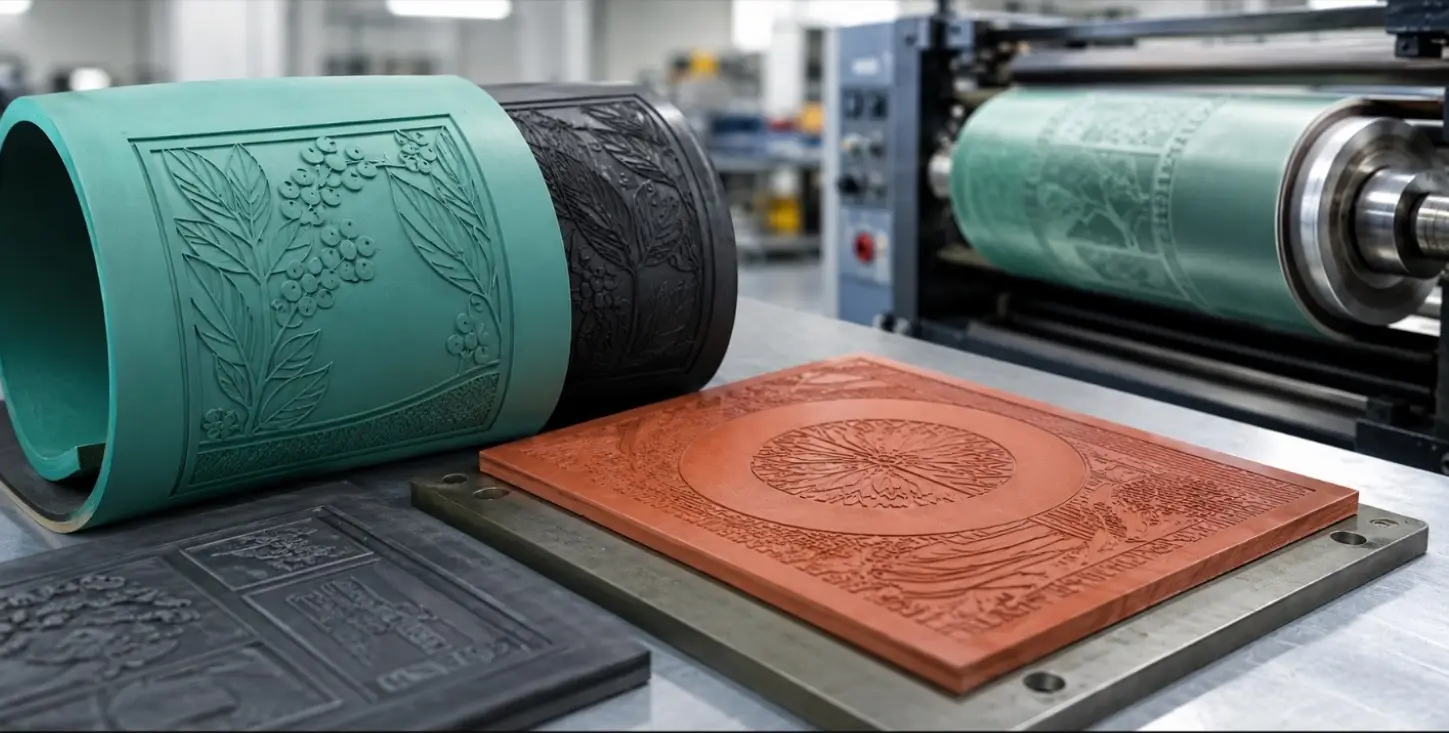
Printing ink does more than add color to a surface. Its chemical makeup can also affect the printing plate, especially when a job involves strong solvents, aggressive cleaning agents, or corrosive ink formulations. A plate that is not suited to the ink may soften, swell, lose detail, or wear down faster than expected. That is why ink compatibility deserves attention before production begins. When the right material is selected for the application, the printing process can remain much more consistent from the first impression to the last.
What
Can Rubber Printing Dies Handle Corrosive Inks?
Yes, certain rubber printing dies can be manufactured to perform effectively with demanding ink systems. The important consideration is material compatibility. Different rubber formulations respond differently to solvents, chemicals, pressure, and repeated ink exposure. A material that performs well for one application may not necessarily provide the same results with another ink, which is why the ink formulation and working conditions should be considered before production begins.
What Happens When the Wrong Plate Is Used?
Using an unsuitable plate with aggressive ink can create problems that become more noticeable as production continues. Chemical exposure may change the plate’s surface, flexibility, or dimensions, eventually affecting image transfer and print consistency. Fine details may become less defined, edges can lose their sharpness, and the plate may require replacement sooner than expected. Some common warning signs include:
- Swelling or distortion after ink exposure
- Loss of fine detail or edge definition
- Changes in plate flexibility
- Uneven or inconsistent impressions
- Premature surface wear
These signs are worth addressing early because continuing to use a poorly matched plate can affect both print quality and production efficiency.
Understanding the Printing Conditions
Ink compatibility should be considered alongside several other factors. The substrate, press pressure, production volume, cleaning process, drying conditions, and expected impression count can all influence how a plate performs. A printer working with a rough or flexible substrate may have different requirements from one printing on a smooth surface. Similarly, a short production run using a mild ink presents a different set of demands from a long run involving aggressive chemicals.
Choosing the Right Rubber Material
Material selection plays a major role in achieving dependable printing results. Rubber compounds can vary in their resistance to solvents, chemicals, pressure, and repeated exposure, so the choice should be based on the actual application. Experienced rubber platemaking manufacturers can evaluate the conditions surrounding a job and help determine a suitable rubber type and plate specification. This becomes especially useful when the application involves unusual substrates, corrosive inks, or specialized production requirements.
Why Plate Thickness Matters
Ink resistance is only one part of plate performance. Thickness can also affect how the plate responds to pressure and transfers an image to the substrate. A plate that is too soft, too thin, or otherwise unsuitable for the press may create inconsistent impressions even when the rubber itself has good chemical resistance. We consider the application as a complete system, taking the press, substrate, artwork, ink, plate specifications, and expected production conditions into account rather than focusing on one feature alone.
When Custom Plates Make Sense
Standard specifications do not always suit specialized printing applications. A job may involve a particular substrate, an aggressive ink formulation, unusual artwork, or a production run that demands specific durability. In these situations, customized plate specifications can provide a more practical solution. The right approach may involve selecting an appropriate rubber formulation, adjusting thickness, or developing the plate around the requirements of the printing process. This can help reduce avoidable production issues while supporting more consistent results.
How We Approach Demanding Applications
At PlateCrafters, we understand that reliable plate performance begins with understanding where and how the plate will be used. We can consider factors such as ink chemistry, substrate characteristics, press conditions, plate thickness, and production requirements when determining the appropriate solution. This application-focused approach helps printers avoid choosing a plate based on one specification while overlooking other conditions that may affect performance during a demanding run.
Conclusion
Using solvent-heavy or corrosive inks doesn’t automatically rule out rubber plates. What really matters is whether your material choice fits the actual conditions you’re printing in. Look at the ink itself, what substrate you’re working with, how much pressure the press applies, the plate’s thickness, and how you clean things between jobs. Weigh all that together, and you’ll cut down on premature wear and get more consistent imprints run after run. Not sure where to start? Reach out to PlateCrafters, and we’ll walk through your setup with you.
FAQs
1. Can rubber plates be used with solvent-based inks?
Yes, the right rubber formulation can work effectively with solvent-based and demanding inks. Compatibility should always be checked based on the specific ink and printing conditions.
2. What happens when a rubber plate is incompatible with the ink?
An incompatible plate may swell, soften, lose detail, or wear prematurely. These issues can eventually affect print quality and production consistency.
3. Does plate thickness affect ink performance?
Plate thickness can influence how consistently a plate handles pressure and transfers an image. The appropriate thickness depends on the press, substrate, and application.
4. How can the right rubber plate improve printing results?
A properly selected plate can help maintain image detail, consistent impressions, and better durability during demanding production runs. Material and application compatibility are key.
5. When should a custom rubber plate be considered?
Custom plates can be useful when standard specifications do not suit the substrate, ink, artwork, or production requirements. They allow the plate to be matched more closely to the specific application.