
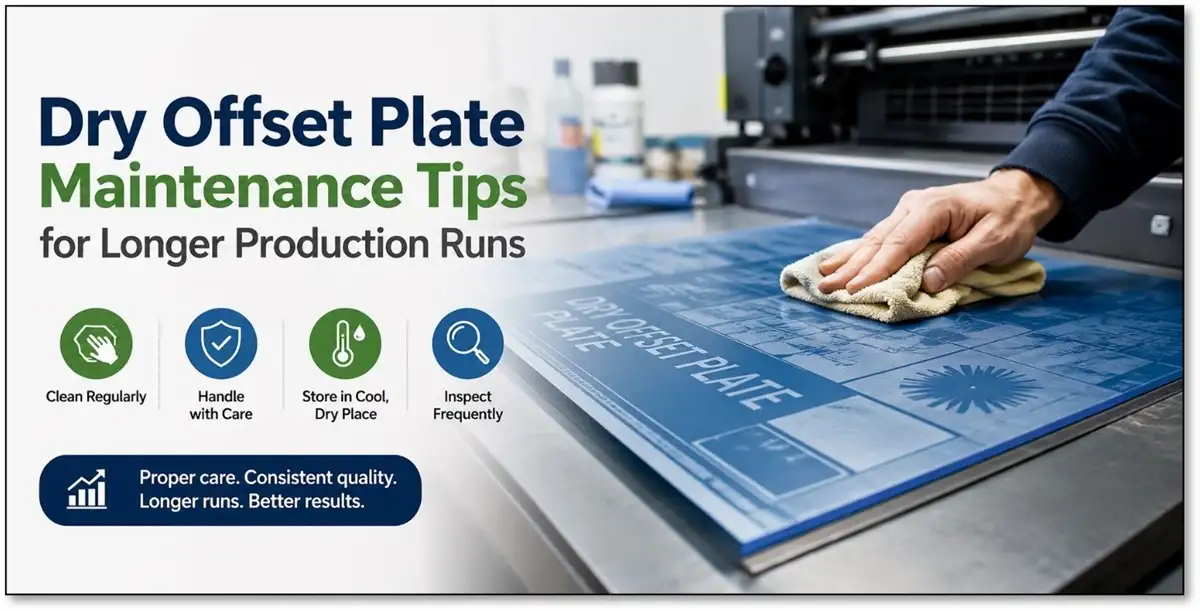
Why Maintenance Matters More Than Most People Think
When a printing operation is running smoothly, plate maintenance rarely gets much attention. Most of the focus naturally falls on production schedules, color consistency, and meeting delivery deadlines. Yet experienced press operators know that many printing problems begin long before defects show up on a finished product. A plate that is neglected, improperly stored, or subjected to unnecessary wear can gradually create issues that affect print quality, increase waste, and shorten production runs. The frustrating part is that these problems often develop so slowly that they go unnoticed until they become expensive. Taking care of a plate is not complicated, but it does require consistency.
Tip 1: Treat Every Plate Like a Precision Tool
It is easy to think of a plate as just another production component, especially in busy facilities where jobs move quickly from one stage to the next. In reality, printing plates are precision-made tools that deserve careful handling. A small scratch, a dent along an edge, or contamination from fingerprints may seem insignificant at first, but those imperfections can affect image transfer once the press is running. We always recommend handling plates with care, keeping them protected during transport, and storing them in clean, dry conditions. A properly cared-for Dry offset plate has a much better chance of delivering consistent performance throughout its service life.
Tip 2: Do Not Let Residue Build Up
One of the most common causes of declining print quality is something surprisingly simple: buildup. Ink residue, coating materials, dust, and other contaminants gradually accumulate during production. At first, there may be no visible impact. Then small inconsistencies start appearing. Fine details lose sharpness. Coverage becomes less uniform. Operators sometimes begin adjusting press settings to compensate when the real issue is sitting directly on the plate surface. Regular cleaning helps prevent these situations. The goal is not excessive scrubbing but steady maintenance using appropriate cleaning materials that protect the integrity of the plate.
Tip 3: Pay Attention to Press Conditions
Many people assume that premature plate wear is a manufacturing issue when it is often related to how the press is operating. Excessive impression pressure, alignment problems, or uneven contact can place unnecessary stress on the plate throughout a production run. The effects may not be obvious during the first few thousand impressions, but they often become apparent over time. Monitoring operating conditions and making small corrections early can significantly reduce wear and help maintain print quality from beginning to end.
Tip 4: Follow a Simple Maintenance Routine
The facilities that get the longest life from their plates are not necessarily doing anything extraordinary. More often, they are simply consistent. A straightforward maintenance routine can prevent many common problems before they have a chance to develop.
- Inspect plates before and after each production run.
- Clean away ink and debris as soon as a job is completed.
- Verify press settings periodically during long runs.
- Store plates in protective sleeves when not in use.
- Keep surrounding work areas free from dust and contaminants.
None of these steps takes much time, but together they can make a meaningful difference.
Tip 5: Keep Environmental Conditions Under Control
Production environments have a larger influence on plate performance than many people realize. Excessive humidity, rapid temperature changes, and airborne contaminants all contribute to wear over time. Facilities with stable environmental conditions generally experience fewer surprises and more predictable results. It is one of those factors that often gets overlooked because its effects are gradual, yet experienced operators understand how much consistency matters. A controlled environment helps protect both the plate and the quality of the finished product.
Tip 6: Start with Quality Manufacturing
Maintenance can only accomplish so much if the plate itself is not manufactured to a high standard. Precision manufacturing affects durability, image accuracy, and overall performance throughout the production cycle. The same principle applies across many industrial applications. In fields such as Master Engraving for Sand Casting, accuracy at the beginning of the process has a direct impact on the outcome. Printing is no different. Quality built into the product from the start often leads to fewer problems later.
Tip 7: Train Operators to Spot Problems Early
The best maintenance programs are proactive rather than reactive. Experienced operators often notice subtle changes before they become serious production issues. A slight decline in image quality, an unusual wear pattern, or recurring inconsistencies may indicate that something needs attention. Addressing these warning signs early is almost always easier and less expensive than dealing with a major disruption after it affects production.
Conclusion
In most cases, luck is not the cause of long manufacturing runs. They are typically the result of a combination of factors, including the presence of good equipment, appropriate operating conditions, and stringent maintenance methods. It is possible to increase the useful life of a dry offset plate by taking a few extra minutes to check, clean, and handle it in the appropriate manner. This will also assist in maintaining print quality throughout intense tasks. While working in a production setting, we at PlateCrafters are well aware of the significance of reliability. Get in touch with us right now if you are searching for precise plate solutions that are created for performance and longevity, and allow us to assist you in supporting your next project with the quality and expertise that your operational needs require.
FAQs
1. Why is dry offset plate maintenance important?
Regular maintenance helps prevent print defects and uneven image transfer during long runs. It also extends plate life and reduces unexpected downtime.
2. How often should a dry offset plate be cleaned?
Ideally, plates should be cleaned after each production run or whenever ink buildup is noticed. Consistent cleaning prevents residue from affecting print quality.
3. What causes premature wear on a dry offset plate?
Most premature wear comes from improper press settings, excessive pressure, or poor handling. Environmental factors and lack of cleaning also contribute.
4. Can storage conditions affect plate performance?
Yes, humidity, dust, and temperature fluctuations can gradually degrade plate quality. Proper storage in clean, dry conditions helps maintain stability.
5. How do I know if a plate needs replacement?
If you notice recurring print inconsistencies, loss of detail, or visible surface wear, it may be time to replace it. Regular inspection helps catch these signs early.