
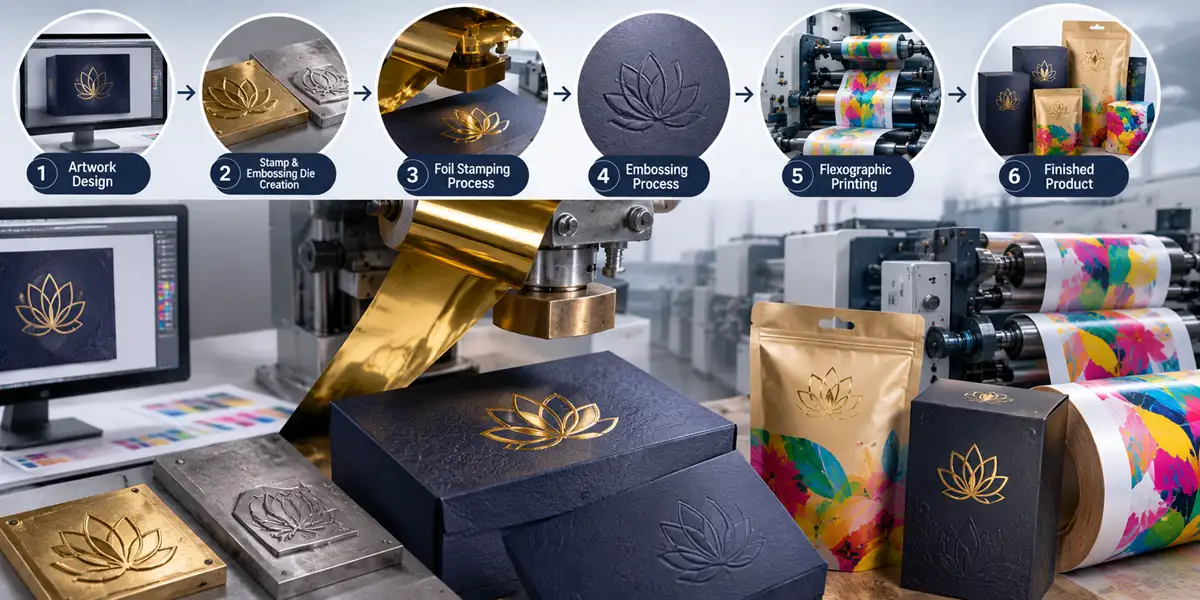
Where the Process Begins: Turning Ideas Into Finished Designs
Nobody stumbles into a premium printed product by luck. Long before a package, label, or specialty piece lands in a customer’s hands, it passes through a chain of decisions that most people never think about, design choices, material tests, and small adjustments that only someone who has done this for years would even notice. Foil stamping and embossing sit right in the middle of that chain. They are finishing techniques, sure, but calling them “finishing” almost undersells what they do, because they can take a design that looks fine on a screen and turn it into something a customer actually wants to hold onto. Shine, depth, texture, all of it changes the feel of a piece in ways flat printing simply can’t touch. And it all starts the same way every time, with a real look at the artwork, the material it’s going on, and what the client actually wants the final piece to say before a single machine gets turned on.
Preparing Artwork for a Precise Finish
This is the stage where most of the real thinking happens, even though it doesn’t look like much on the surface. A file that looks flawless on a monitor can fall apart the moment it meets a die, and that gap between digital and physical is where experience actually matters. Fine lines, tiny text, logo details, tight patterns, all of these need a second look because what reads clearly at 100% zoom can blur or break once heat and pressure get involved. Skipping this step, or rushing it, tends to show up later as a headache nobody wants, so we treat artwork prep as the foundation rather than a formality. Get it right here, and the rest of the process tends to go a lot smoother.
Creating Precision Dies for Consistent Results
Once the artwork is locked in, attention shifts to the die, and this is where craftsmanship really earns its name. The die is what actually presses the design into the material, so its accuracy determines almost everything about how the final piece looks and feels. There’s not much room for error either; a die that’s slightly off can throw the whole impression out of balance, softening edges that should be crisp or shifting a detail just enough to notice. Building a good die takes technical know-how and a fair bit of patience, but the payoff is a clean, repeatable result run after run, which is really the whole point of doing this work properly in the first place.
Understanding the Foil Stamping Process
Foil stamping works through a combination most people never think about: heat and pressure, applied together, transferring a metallic or specialty foil onto the surface to create that distinctive look. Brands often reach for it to draw the eye toward logos, key lettering, or decorative touches that deserve a bit more attention than the rest of the design. A custom foil stamp gives a business room to shape a finish that actually fits its identity, rather than settling for something generic. Sometimes that means a light, understated accent, and other times it calls for something bolder and more luxurious, but either way, foil stamping brings a level of polish that standard ink on paper just doesn’t reach.
Adding Texture and Dimension With Embossing
Embossing takes things a step further by adding a raised element to the surface, something a customer can feel before they even read a word. Most printing techniques stop at color and shape, but embossing brings in touch, and that changes how people experience a product in a way that’s hard to describe until you’ve held one yourself. It shows up often in luxury packaging, specialty labels, and higher-end printed goods where every small detail is expected to hold up under scrutiny. Pair it with foil stamping, and the result is a piece that works on two levels at once, catching the eye and rewarding the hand.
Key Factors That Influence the Final Outcome
Nothing about this process happens by accident, and the outcome always traces back to a handful of decisions made early on. Artwork preparation sets the stage by making sure every element can actually survive production, die precision decides whether details stay sharp or start to soften, material selection shapes the texture and overall quality in ways that are easy to underestimate until you’ve compared a few options side by side, and quality checks, run consistently rather than as an afterthought, keep everything on track from the first sheet to the last. In short, the factors that matter most usually come down to:
- Artwork preparation: keeps every design element production-ready
- Die precision: delivers sharp, consistent impressions
- Material selection: shapes, texture, feel, and appearance
- Quality checks: catch issues before they reach the final product
Supporting Better Results for Modern Printing Projects
Flexographic printing companies spend a lot of their time on packaging and printed goods where appearance genuinely carries weight, and foil stamping paired with embossing gives those products an edge that’s hard to fake. It helps a brand feel more premium and gives it another way to stand apart on a crowded shelf. That said, consistency doesn’t happen without real experience across design prep, materials, and the finishing techniques themselves. At PlateCrafters, we’ve built our approach around understanding how each of these pieces connects, and we focus on solutions that respect both the creative vision and the practical demands of production.
Conclusion
Getting from artwork to a finished, stamped, or embossed product is never just about adding a decorative flourish at the end. It’s creative planning, technical skill, and careful execution, layered together at every stage of the process. Each step, from the first design review to the final press run, adds something to the overall quality of what eventually reaches the customer. For flexographic printing companies looking to sharpen their finishing capabilities, working alongside people who understand this level of precision tends to make all the difference. The right finish can turn an ordinary piece into something people actually remember, so reach out to us at PlateCrafters today and let’s talk about how we can help bring your next foil stamping and embossing project to life.
FAQs
1. What is the difference between foil stamping and embossing?
Foil stamping adds metallic or specialty finishes to printed materials, while embossing creates raised textures that add depth and dimension.
2. Why is artwork preparation important for foil stamping projects?
Proper artwork preparation ensures designs, fine details, and logos transfer accurately during the stamping and embossing process.
3. How does a custom foil stamp improve printed materials?
A custom foil stamp creates unique finishes that enhance branding and give packaging or printed pieces a more premium appearance.
4. What role does the die play in the foil stamping process?
The die transfers the design onto the material, helping achieve precise, consistent, and high-quality impressions.
5. Why do printing companies use foil stamping and embossing together?
Combining both techniques creates a visually appealing and tactile finish that helps products stand out.