
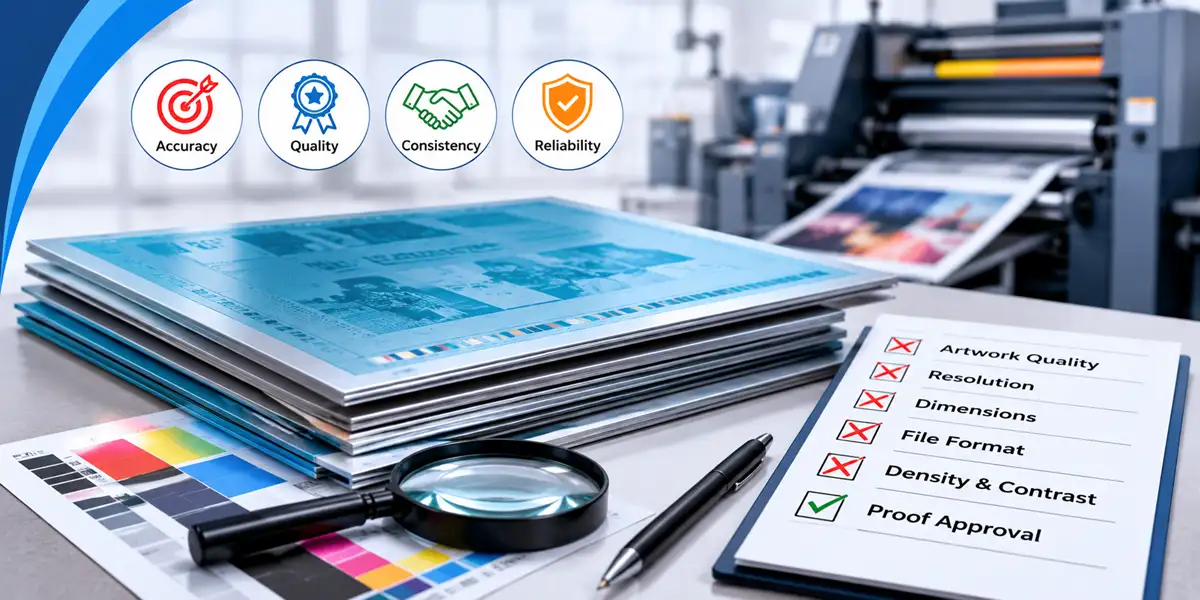
Why the Right Plate Order Matters
Ordering printing plates in bulk may seem like a straightforward purchasing decision, but there is much more involved than selecting a quantity and waiting for delivery. The plates used in production have a direct impact on print consistency, image quality, and how efficiently a press can run. In many cases, problems that appear during printing actually started much earlier, during the ordering process itself. A missed specification, incomplete artwork file, or misunderstanding about the application can create delays, wasted materials, and frustrating adjustments later. A little attention before placing the order often makes a significant difference once production begins.
Mistake 1: Not Reviewing Artwork Specifications Carefully
A printing plate is built around the artwork it receives, which means the quality of that file matters from the beginning. One of the most common mistakes is assuming that an artwork file is ready without checking the details that affect plate production. File format, image resolution, dimensions, fine design elements, and other technical requirements all need to be considered before manufacturing starts. Small issues that seem harmless during the review stage can become noticeable once the design reaches the press. Taking time to confirm the artwork is prepared correctly helps avoid unnecessary corrections and keeps the entire process moving in the right direction.
Mistake 2: Focusing Only on the Lowest Price
Everyone wants to control costs, especially when ordering in larger quantities, but the cheapest option is not always the most practical choice. Printing plates are a production tool, and their performance affects everything that follows. A plate that lacks consistency or is not manufactured to the right specifications can create problems during printing, including extra adjustments, uneven results, and wasted materials. When businesses invest in Custom printing on plates wholesale, they should consider the full value of the order, including quality, reliability, technical knowledge, and the ability to deliver consistent results over time.
Mistake 3: Choosing a Plate Without Considering the Application
A printing plate should always match the job it is expected to perform. Different materials, printing methods, inks, and design requirements can change what type of plate will work best. A solution that performs well for one application may not be the right choice for another. This is where experience matters. Understanding the conditions of the print run before ordering helps avoid issues such as poor detail reproduction, inconsistent coverage, or unnecessary production adjustments. The right plate choice starts with understanding the actual needs of the project, not simply selecting a standard option.
Mistake 4: Not Communicating Important Production Details
Many ordering problems are not caused by the plate itself but by missing information before production begins. Details such as plate thickness, mounting requirements, printing conditions, and expected timelines should be discussed clearly from the start. These conversations may feel like extra steps, but they often prevent bigger issues later. At PlateCrafters, we know that no two printing projects are exactly alike, and understanding the details behind each order helps create plates that work properly within the customer’s existing production process.
Mistake 5: Overlooking Finishing and Coating Requirements
Finishing requirements are commonly an afterthought, yet they can have a substantial impact on the final appearance of a printed product. If specialty coatings or enhanced finishes are required for the project, these factors should be included in the plate selection process. Waiting until production is on its way can limit possibilities and cause unneeded hassles. In those situations where a smooth and uniform coating effect is required, the UV Coating plates have to be carefully made to provide correct coverage and reliable performance during the print cycle.
Mistake 6: Failing to consider future production
A big order is rarely just one day’s manufacturing. Many organizations require repeating the same designs again and again with the same quality requirements. That’s why choosing a supplier solely on the present purchase can generate problems down the line. “Consistency across plate orders is critical, especially for brands that rely on repeat packaging, labels, or printed materials. Working with a supplier you trust helps establish a more predictable process in terms of future production needs.
What to Check Before Placing a Bulk Order
Before approving a large printing plate order, businesses should take a few moments to review the details that can influence the final result:
- Confirm that artwork files are complete, accurate, and suitable for plate production.
- Make sure the selected plate type matches the printing method and material requirements.
- Discuss production timelines, order quantities, and any special project considerations.
- Share information about coatings, finishes, or unique printing requirements early in the process.
- Review quality expectations before production begins to avoid misunderstandings.
These checks are simple, but they can prevent many of the issues that slow down production and increase costs.
Conclusion
For businesses that need Custom printing on plates wholesale, it’s not simply about getting plates in bulk. The ultimate objective is reliable performance, consistent print quality, and a smoother production process. A carefully prepared plate gives crisper details, better registration, and less interruption once you start printing. Avoiding typical ordering blunders and working with a skilled plate provider helps organizations make confident decisions and develop a more effective process. Contact PlateCrafters today to discuss your printing needs and discover the ideal plate solution for your next project.
FAQs
1. What should businesses check before ordering custom printing plates in bulk?
Businesses should review artwork specifications, plate requirements, printing methods, and production timelines before placing a bulk order.
2. How does choosing the right printing plate affect print quality?
The right plate helps improve image clarity, registration accuracy, consistency, and overall press performance during production.
3. Why should companies avoid choosing printing plates based only on price?
Lower costs may lead to quality issues, production delays, or inconsistent results that increase expenses over time.
4. Are UV Coating plates suitable for specialty printing applications?
Yes, UV Coating plates are designed to support smooth coating applications and consistent finishes for various printed products.
5. How can businesses ensure consistent results for repeat printing projects?
Working with an experienced plate provider helps maintain quality standards and ensures reliable results across future production runs.