
-
Introduction
A printed label or package can look effortless, but the real work starts long before the press begins turning. The plate is where it all begins, and we know that small imperfections here show up everywhere later. Digital photopolymer plates define how cleanly ink transfers and how sharp the final image appears. We focus on precision, repeatability, and durability to make plates that perform consistently every run, day after day.
Step 1: Reviewing and Preparing the Artwork
The artwork file starts everything. Screen perfection doesn’t always translate to print. Lines can disappear, lettering can slur, and tight details may need correction. The artwork is thoroughly reviewed and prepared in prepress software to replicate accurately on photopolymer printing plates. Doing this step completely prevents problems and ensures the plate works properly.
Step 2: Imaging the Plate Surface
Once the artwork is ready, we move the plate into imaging. Specialized equipment exposes the design onto the photopolymer surface with high precision. At this stage, the plate still looks flat, but the image areas are forming. A well-imaged plate makes a huge difference on press. It keeps ink transfer even, reduces setup time, and prevents inconsistencies.
Step 3: Ultraviolet Exposure
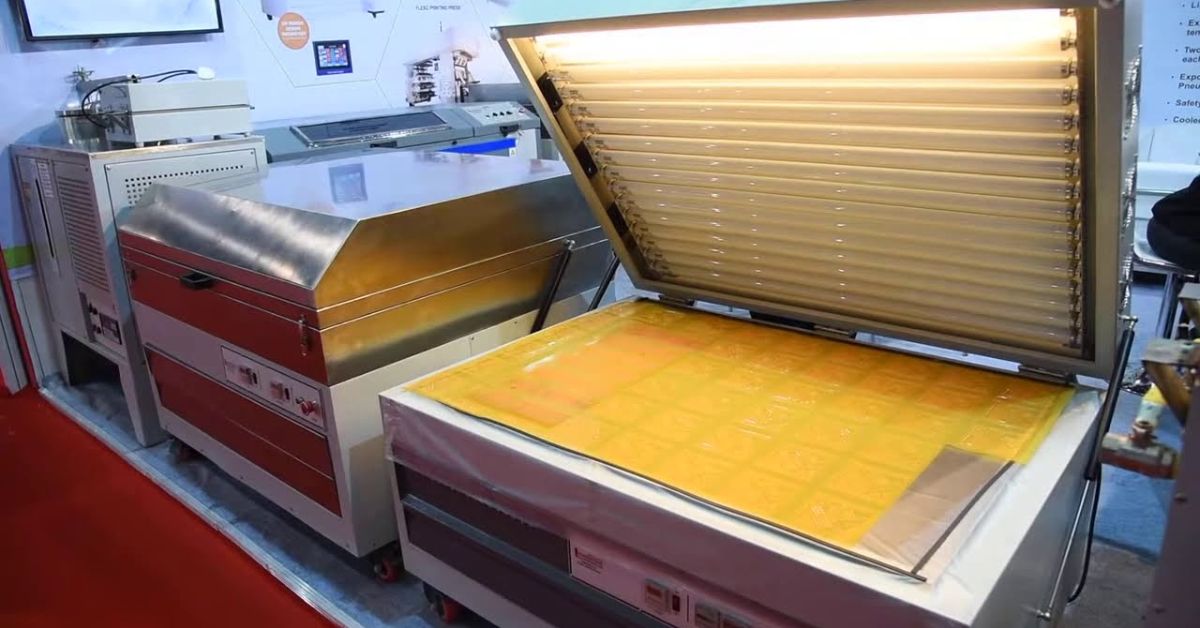
Ultraviolet exposure follows plate exposure. Unexposed parts stay soft while light-hit areas harden. Contrast generates the elevated ink path during printing. Because even slight changes affect relief detail and depth, we continuously monitor timing and intensity. After adequate exposure, the plate retains fine lines and delicate characteristics throughout large manufacturing runs.
Step 4: Developing the Plate Image
After exposure, we move the plate into development, where the unexposed polymer is washed away. This reveals the raised printing surface. The design begins to feel tangible at this point. Careful handling is essential because even minor errors can affect how the plate prints later. Proper development ensures it performs predictably when mounted on the press cylinder.
Step 5: Drying and Post-Exposure
We dry the plate after development to stabilize the structure. The polymer is reinforced by another exposure that adheres to the picture. Failure to do this step would lead to sloppy transfer of ink or distortion. This dictates the plate’s capability to sustain intensive production. We never cut corners.
Step 6: Inspection and Finishing.
The completion stage is the process of ensuring that the plate is up to its running without any surprises. Several important steps occur here:
- Reinforcing the structure by curing the polymer.
- Checking of image sharpness and relief levels.
- Cutting it to fit the press cylinder.
- Covering the surface to get a uniform ink transfer.
Each of the steps might seem to be a routine, yet they are all important in ensuring a good performance of the press.
Step 7: Readying the Plate for Press Production.
The plate is then inspected and finished, and is now ready to be mounted on the press. The surface raised disperses ink to labels, packaging materials, and corrugated substrates in a uniform manner. Although the history surrounding Vintage printing plates on sale is still valued among collectors, we are creating new photopolymer printing plates that will always work in the long and accurate production process. At Plate Crafters, we specialize in making plates that will contain detail, will run freely, and will assist printers to prevent pre-problem problems.
Conclusion
Producing a photopolymer plate is a process that rewards care and attention at every stage. From artwork preparation to imaging, exposure, development, and finishing, each step shapes the final printed image. When we build plates carefully, printers notice the difference through cleaner images, steadier ink transfer, and fewer surprises on press. If dependable plates are essential to your operation, contact us today and see how our plate production process can support your next printing project.
Also Read: What to Look for in Reliable Photopolymer Plate Manufacturers.
FAQs
-
-
How does digital photopolymer improve plate performance?
Digital photopolymer plates allow for much finer detail and sharper images. They also ensure consistent ink transfer, making long production runs more reliable.
-
Can photopolymer plates handle long production runs?
Yes, these plates are designed for durability and maintain image quality even over extended press cycles. They perform reliably without frequent adjustments.
-
What steps ensure a plate prints accurately?
Accurate printing depends on careful artwork preparation, precise imaging, UV exposure, development, and proper finishing. Skipping any step can affect the final result.
-
Why is inspection and finishing important?
Inspection confirms that the image relief and clarity are correct, while finishing ensures the plate fits the press and transfers ink evenly. Both are critical for consistent performance.
-
Are digital photopolymer plates suitable for all substrates?
These plates work on a wide range of materials, from labels to packaging to corrugated surfaces. They provide consistent results across different printing applications.
-