
Why Fine Detail Still Trips Up Even Experienced Printers
Getting a crisp, clean finish on premium print work sounds simple until you actually try it. We have seen countless printers struggle with blurred edges, uneven pressure marks, and foil that lifts in all the wrong places. In this guide, we will break down what actually causes these detail issues and walk you through the fixes, covering everything from die quality and pressure control to choosing the right substrate and foil pairing for a flawless finish. The truth is that fine detail work demands more than a good die and a heat press. It requires the right combination of pressure control, temperature calibration, and material compatibility, and when even one of these is off, the final piece looks amateurish instead of premium. That is exactly why we believe understanding the fundamentals matters so much before jumping into production.
The Role of Hot Foil Stamping & Embossing in Premium Print Work
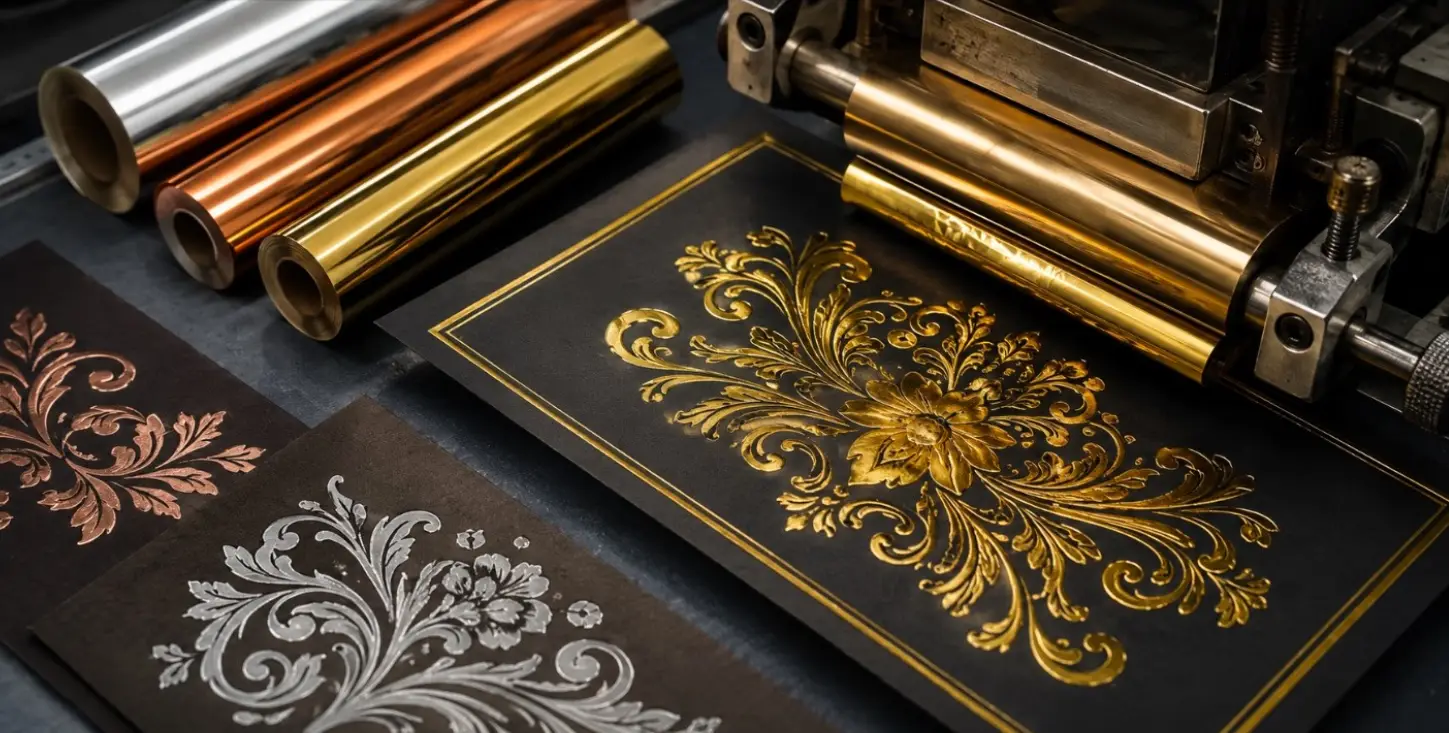
When we talk about elevating a print piece from ordinary to luxurious, hot foil stamping & embossing is usually the first technique that comes to mind. It adds a tactile, dimensional quality that ink alone simply cannot replicate. We often tell our clients that the magic lies in how light interacts with the raised or recessed surface, creating a visual depth that instantly signals quality. Wedding invitations, luxury packaging, business cards, and certificates all benefit from this treatment because it turns a flat design into something people actually want to touch and hold onto.
Getting the Die Right Before You Even Start
A huge portion of detail problems trace back to the die itself. If the engraving is too shallow or the design has elements that are too thin or too close together, the foil will not transfer cleanly no matter how well the press is calibrated. We always recommend working with a die maker who understands print production, not just engraving in general. Small adjustments, like widening thin serif fonts or simplifying intricate line work, can make a massive difference in how the final piece turns out.
Pressure, Heat, and Timing: The Three Variables That Matter Most
Once the die is sorted, the actual stamping process comes down to balancing three variables, and getting any one of them wrong can ruin an otherwise great design. In our experience, the most common issues come from:
- Uneven pressure across the plate, which causes patchy or incomplete foil coverage
- Incorrect dwell time, leading to either under-adhered foil or scorched substrate
- Temperature settings that do not match the specific foil and material combination being used
- Substrate texture that has not been tested beforehand, causing unexpected results on press
Testing on scrap material before running the full job saves time, money, and a lot of frustration.
Choosing the Right Substrate and Foil Combination
Not every paper or cardstock takes foil the same way. Coated stocks tend to produce cleaner, sharper results, while uncoated or heavily textured papers can cause foil to sit unevenly or peel over time. We spend a good amount of time helping clients match their substrate to the correct foil type, whether that is a metallic, pigment, or holographic finish, because the wrong pairing almost always shows up in the final product. This is one of those areas where a quick test run really does pay off.
Working with a Trusted Plate Maker Changes Everything
At the end of the day, even the best press operator cannot fix a poorly made plate. That is why so many printers eventually turn to specialists like PlateCrafters, who understand exactly how die depth, bevel angle, and material grade affect the finished piece.
A hot foil stamped result that looks flawless almost always starts with a plate built specifically for that job, not a generic template.
Conclusion
If you are ready to bring sharper detail and a more premium feel to your next print run, we would love to help you get there. Reach out to us today, and let us show you what precision craftsmanship can really look like on paper.
FAQs
1. How can printers achieve sharper foil details?
Use well-prepared artwork, a precision-made die, and properly calibrated pressure and temperature. Testing the setup before production can also improve consistency.
2. Does the substrate affect foil stamping quality?
Yes, different papers and materials react differently to heat and pressure. Choosing a compatible substrate helps create cleaner and more durable results.
3. What causes uneven foil coverage?
Uneven pressure, incorrect temperature, unsuitable dwell time, or poor die preparation can cause incomplete foil transfer and patchy results.
4. Can intricate designs be used for foil stamping?
Yes, but very fine lines and tightly spaced details may need adjustments. Simplifying delicate elements can help preserve clarity in the finished impression.
5. Why is die quality important for detailed foil work?
A properly manufactured die provides accurate detail and consistent pressure during production. The right die material and specifications can make a noticeable difference in the final finish.