
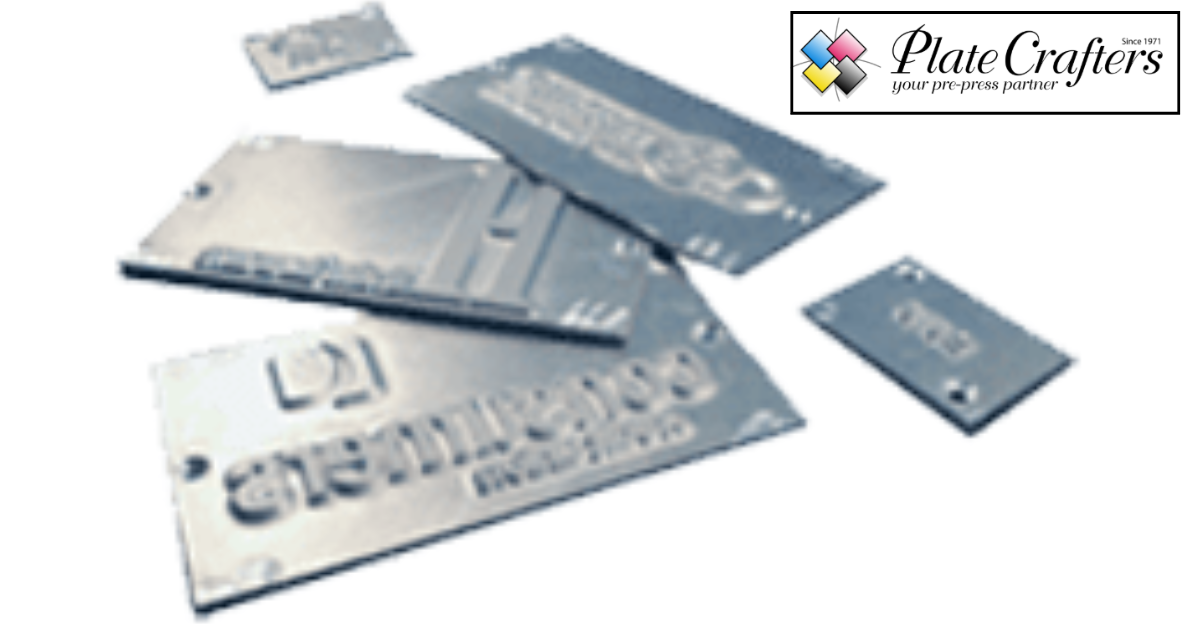
Foil stamping is one of those processes people notice immediately, even if they do not know what they are looking at. Something about the shine. The depth. The way light hits the surface makes the design feel intentional. But behind that finished look sits a tool that does all the heavy lifting. At PlateCrafters, we work with custom foil stamp solutions and hot foil stamping dies every day. We also see what happens when those tools are rushed, poorly made, or treated as an afterthought. Foil stamping does not forgive shortcuts. It shows them.
This is not a trend-driven process. It is a craft. And when it is done right, the results speak for themselves.
Foil Stamping Is Simple in Theory, Not in Practice
On paper, foil stamping sounds straightforward. Heat. Pressure. Foil. A die. But anyone who has run a job knows it rarely works out that cleanly unless the die has been made with care.
Too shallow, and the foil does not release evenly.
Too deep, and details start to break down.
Edges are not treated properly, and suddenly you are chasing issues across the entire sheet.
That is why we never treat a custom foil stamp as just another item on a production list. Each one has a job to do, and that job changes depending on the material, the artwork, and how the press will be run.
What Actually Makes a Custom Foil Stamp Work Well?
A good custom foil stamp is balanced. That is the word we come back to again and again.
The depth has to support clean transfer without forcing extra pressure. The surface needs to allow foil to release smoothly, not tear or skip. Fine details need enough support to hold their shape over repeated runs.
At PlateCrafters, we look at how the stamp will behave after the first impression, then the hundredth, then the thousandth. A die that only works at the start of a run is not doing its job.
We design with durability in mind, but not at the expense of detail. That balance matters.
Hot Foil Stamping Dies and the Reality of Press Conditions
Hot foil stamping dies live in real press environments. Heat fluctuates. Pressure shifts slightly. Operators adjust on the fly. A die has to be able to handle that without falling apart.
That is where experience shows.
Our hot foil stamping dies are built to distribute pressure evenly. Uneven pressure is one of the fastest ways to ruin a foil job. It leads to patchy coverage, weak edges, and unnecessary wear.
When pressure is controlled at the die level, the press becomes easier to manage. Jobs run smoother. Waste drops. Results stay consistent.
That is not an accident. It is the outcome of careful die construction. The flexo printing plate must be strong enough to handle the high-stress friction of fast-moving printing equipment yet soft enough to enable the transfer of ink to various substrates, such as plastic, metallic film, or textured paper.
Why File Preparation Still Matters More Than People Think
Even the best die cannot fix a poorly prepared file.
Lines that are too thin. Details packed too tightly. Transitions that do not allow foil to release cleanly. These issues show up fast once heat and pressure are applied.
Before we produce a custom foil stamp, we look at the artwork through the lens of stamping behavior, not just design intent. We ask simple questions that prevent big problems later.
Will this detail hold?
Does this area need breathing room?
Will this transition stamp cleanly?
That early attention saves time and frustration down the line.
Not All Jobs Need the Same Die Approach
One of the biggest mistakes in foil stamping is assuming that every job should be handled the same way.
A bold logo on thick stock behaves very differently than fine text on a delicate surface. Large solid areas require different considerations than intricate line work. That is why customization actually matters.
At PlateCrafters, we adjust our approach based on how the finished piece is meant to look and feel. A custom foil stamp should serve the design, not fight it.
The same applies to hot foil stamping dies. There is no universal solution. There is only the right solution for the job at hand.
What Our Process Looks Like in Real Terms
We do not believe in overcomplicating things. Our process is built around clarity.
We review the job.
We consider the materials.
We think about how the die will run, not just how it will be made.
That mindset comes from years of working with printers who need tools they can trust. Tools that show up ready to work.
PlateCrafters exists to support that kind of reliability.
Why Printers Keep Coming Back to PlateCrafters
Foil stamping can be stressful when tools do not behave. Operators spend time adjusting instead of producing. Jobs slow down. Confidence drops.
Our goal is to remove that friction.
When customers choose PlateCrafters for custom foil stamp work and hot foil stamping dies, they are choosing predictability. They are choosing tools built with real production in mind, not just visual appeal.
We take that responsibility seriously.
Closing Thoughts
Foil stamping has a presence no other finish quite matches. But that presence depends on the quality of the die behind it.
At PlateCrafters, we focus on building custom foil stamp solutions and hot foil stamping dies that perform under real conditions. Not just on paper. Not just at the start of a run. But consistently, job after job.
When the die is right, the process feels controlled. The result feels intentional. And the final piece does exactly what it is meant to do: stand out without trying too hard.
Also Read: Top UV Coating Plates Built by Flexographic Plate Makers Who Understand Print.
FAQ’s
A custom foil stamp is a precision-made die used to apply metallic or pigmented foil using heat and pressure.
Hot foil stamping dies are commonly made from magnesium, brass, or copper depending on detail and run length.
High-quality dies ensure even foil transfer, clean edges, reduced waste, and consistent results throughout production.
No. Each job requires a custom approach based on artwork, substrate, foil type, and press conditions.
PlateCrafters designs dies with balanced depth, proper pressure distribution, and real press conditions in mind.